
IFLR's latest primer looks at the Basel Committee’s new voluntary guidelines for climate risk disclosures and their global implications

Green sukuk play an increasingly important role in financing the transition to a sustainable future

European dealmakers led the M&A sector with a strong performance during the first half of 2025

Amid shifting market conditions, private credit continuation funds may become an important tool to unlock value and liquidity but investors need to be aware of their challenges
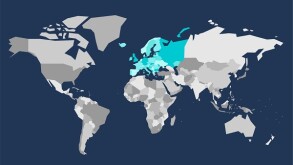
While deals are being diverted away from the US to Europe in certain sectors, the picture does not look rosy as national level FDI regimes grow in number across the region

Chinese investors are looking to diversify outbound investment, not only looking to Europe and elsewhere in Asia but at deals with the potential to avoid scrutiny from the US Committee

The majority of survey participants expect to see interest in Chinese outbound M&A transactions going into Southeast Asia, while some expect activity in Western and Eastern Europe

Fuelled by internal policies and the need to gain access to technology, healthcare and TMT will continue to be popular sectors that draw the most interest from Chinese investors

Faced with geopolitical tensions and heightened national security concerns on FDI, Chinese enterprises aspiring to go outwards will need to consider alternatives
IFLR surveyed the market to gauge sentiment for the next 12 months to see where the challenges and opportunities lie

Russia's invasion of Ukraine has serious sovereign creditworthiness implications for both countries as they weaken economically and fiscally

The fourth part of this five part report examines the definition of sovereign risk, how sovereign risk is assessed, and what the available options are for its mitigation
Sponsored
Sponsored
-
 Sponsored by Hogan LovellsHogan Lovells' Lewis Cohen and Edgard Alvarez, with Sairah Burki of Structured Finance Industry Group, explain why the adoption of a HQS label could spell trouble for transactions that don’t meet the label requirements
 -
Sponsored by Akin Gump Strauss Hauer & FeldAkin Gump's Christopher Leonard, Ezra Zahabi and Chris Poon on how Esma’s long-awaited technical advice on the directive moves the EU one step closer to a single regulatory framework
-
Sponsored by Al Tamimi & CompanyRafiq Jaffer Factoring is a financing technique that enables an exporter to collect the purchase price of the goods relating to an export transaction before the due date of payment. Typically, banks in Qatar act as factors and purchase receivables relating to the export transaction. The same technique is also used for financing contractors and sub-contractors, where works have been performed or goods and services have been supplied and payment under the corresponding invoice is payable after a period of time (such as 90 days). This latter technique is referred to as invoice discounting. One key commercial consideration for companies seeking to sell their receivables is for the receivables to be removed from their balance sheet as a debt and to appear as revenue that has been collected. This treatment is possible if the receivables are sold on a without-recourse basis. Auditors usually require a legal opinion to confirm that a true sale of the receivables has been effected.


-

Yoon & Yang chief: strong pool of talent a ‘key building block’
Hee Woong Yoon, managing partner at Yoon & Yang, reveals key growth opportunities in corporate finance and M&A for the firm as he settles into his new role -

Linklaters: ‘Regulators are becoming more sophisticated in their supervision’
Carl Fernandes, global head of Linklaters’ financial regulation group, outlines the firm’s opportunities in the financial sector, particularly in Europe and the US -

Argentine law firm eyes debt market opportunities in volatile market
TCA Tanoira Cassagne’s founding partner Alexia Rosenthal explains how the firm is helping clients access capital in a challenging environment -

Kirkland & Ellis captures ‘take-private’ opportunities in Asia
Asia M&A co-head, Joey Chau, reflects on the firm’s work on public-to-private transactions in Hong Kong and the outlook for deal opportunities in the region -

Afreximbank: ‘Responsiveness and accessibility of external counsel are critical’
Legal services head Joy Albright outlines the challenges for the rapidly growing bank and her priorities when choosing external counsel