
IFLR's latest primer looks at the Basel Committee’s new voluntary guidelines for climate risk disclosures and their global implications

Green sukuk play an increasingly important role in financing the transition to a sustainable future

European dealmakers led the M&A sector with a strong performance during the first half of 2025

Amid shifting market conditions, private credit continuation funds may become an important tool to unlock value and liquidity but investors need to be aware of their challenges
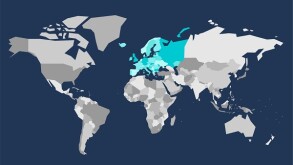
While deals are being diverted away from the US to Europe in certain sectors, the picture does not look rosy as national level FDI regimes grow in number across the region

Chinese investors are looking to diversify outbound investment, not only looking to Europe and elsewhere in Asia but at deals with the potential to avoid scrutiny from the US Committee

The majority of survey participants expect to see interest in Chinese outbound M&A transactions going into Southeast Asia, while some expect activity in Western and Eastern Europe

Fuelled by internal policies and the need to gain access to technology, healthcare and TMT will continue to be popular sectors that draw the most interest from Chinese investors

Faced with geopolitical tensions and heightened national security concerns on FDI, Chinese enterprises aspiring to go outwards will need to consider alternatives

IFLR surveyed the market to gauge sentiment for the next 12 months to see where the challenges and opportunities lie

Russia's invasion of Ukraine has serious sovereign creditworthiness implications for both countries as they weaken economically and fiscally

The fourth part of this five part report examines the definition of sovereign risk, how sovereign risk is assessed, and what the available options are for its mitigation
Sponsored
Sponsored
-
 Sponsored by Nagashima Ohno & TsunematsuOn November 30 2018, partial amendments to the Ordinance for Enforcement of the Notary Act (Amended Ordinance) came into force. The Amended Ordinance aims to identify the beneficial owners of companies and improve transparency in order to prevent money laundering or terrorism financing activities. According to the Amended Ordinance, when making an application to a notary for the authentication of articles of association to incorporate new joint-stock companies (kabushiki-kaisha), general incorporated associations (ippan-shadan-houjin) or general incorporated foundations (ippan-zaidan-houjin), applicants must declare to the notary: (i) the beneficial owner of the company; and, (ii) that the beneficial owner is neither a member of criminal organisations nor an international terrorist, and where there is any reasonable doubt the notary will request the applicant to provide explanations.
 -
Sponsored by LPA LawChinese investment into France grew in 2018 even as it dropped across the rest of Europe, and investor-friendly changes may give it a further boost. Raphaël Chantelot, Fanny Nguyen, Hubert Bazin and Nicolas Vanderchmitt of LPA – CGR Avocats take a look at the environment
-
Sponsored by Bär & KarrerIn a referendum held on May 19 2019, the Federal Act on Tax Reform and AHV Financing (TRAF) was adopted by the Swiss people and the cantons. The reform includes several measures directed at corporate income taxation, such as the abolition of tax privileges for certain types of companies (status companies) and the implementation of internationally accepted replacement measures such as a patent box or the ability to super-deduct R&D costs (up to 150% of actual costs). The reform also contains tax measures at the shareholder level. The majority of the measures will be in force as of January 1 2020.



-

Yoon & Yang chief: strong pool of talent a ‘key building block’
Hee Woong Yoon, managing partner at Yoon & Yang, reveals key growth opportunities in corporate finance and M&A for the firm as he settles into his new role -

Linklaters: ‘Regulators are becoming more sophisticated in their supervision’
Carl Fernandes, global head of Linklaters’ financial regulation group, outlines the firm’s opportunities in the financial sector, particularly in Europe and the US -

Argentine law firm eyes debt market opportunities in volatile market
TCA Tanoira Cassagne’s founding partner Alexia Rosenthal explains how the firm is helping clients access capital in a challenging environment -

Kirkland & Ellis captures ‘take-private’ opportunities in Asia
Asia M&A co-head, Joey Chau, reflects on the firm’s work on public-to-private transactions in Hong Kong and the outlook for deal opportunities in the region -

Afreximbank: ‘Responsiveness and accessibility of external counsel are critical’
Legal services head Joy Albright outlines the challenges for the rapidly growing bank and her priorities when choosing external counsel