
IFLR's latest primer looks at the Basel Committee’s new voluntary guidelines for climate risk disclosures and their global implications

Green sukuk play an increasingly important role in financing the transition to a sustainable future

European dealmakers led the M&A sector with a strong performance during the first half of 2025

Amid shifting market conditions, private credit continuation funds may become an important tool to unlock value and liquidity but investors need to be aware of their challenges
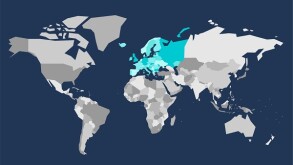
While deals are being diverted away from the US to Europe in certain sectors, the picture does not look rosy as national level FDI regimes grow in number across the region

Chinese investors are looking to diversify outbound investment, not only looking to Europe and elsewhere in Asia but at deals with the potential to avoid scrutiny from the US Committee

The majority of survey participants expect to see interest in Chinese outbound M&A transactions going into Southeast Asia, while some expect activity in Western and Eastern Europe

Fuelled by internal policies and the need to gain access to technology, healthcare and TMT will continue to be popular sectors that draw the most interest from Chinese investors

Faced with geopolitical tensions and heightened national security concerns on FDI, Chinese enterprises aspiring to go outwards will need to consider alternatives

IFLR surveyed the market to gauge sentiment for the next 12 months to see where the challenges and opportunities lie

Russia's invasion of Ukraine has serious sovereign creditworthiness implications for both countries as they weaken economically and fiscally

The fourth part of this five part report examines the definition of sovereign risk, how sovereign risk is assessed, and what the available options are for its mitigation
Sponsored
Sponsored
-
 Sponsored by Elias Neocleous & CoDistressed companies are those facing financial crises not resolvable without a considerable recasting of the firm's operations, structures and finance. This can be brought about through a company's failure to make a substantial payment of principal or interest to a creditor. Distress can also be seen in terms of financial ratios, for example in terms of liquidity and longer-term solvency. The basic and most prevalent forms of corporate distress assessment are the cash flow and the balance sheet tests, which apply both to going concern and break up (insolvency) valuation. In terms of break up valuation, under the cash flow test, a company is insolvent when it is unable to pay its debts as they fall due. Under the balance sheet test, the entity is insolvent if the book value of its assets, as listed on the conventional balance sheet, is less than its reported liabilities. The notions of asset exchangeability/liquidity and time prospect of sale are of great importance, particularly for the balance sheet test, as the latter includes the assessment of assets' value, by definition (UK Insolvency Act, 1986, 123 [2]). In this article, we first present the international/UK insight and, then, the Cyprus position on the matter.
 -
Sponsored by Futej & PartnersA long-standing burden on the courts in the Slovak Republic is the large number of old enforcement proceedings. Old enforcement proceedings are referred proceedings that commenced before April 1 2017, when a large amendment of the Code of Enforcement Procedure entered into force. While the new rules from this date give bailiffs strict limits for the new enforcement proceedings – two-and-a-half years for debtors who are legal entities and five years for debtors who are natural persons – no such limits existed for the old enforcement proceedings. This fact, plus the fact that old enforcement procedures could not be terminated for insolvency of a debtor without the creditor's consent, explains why there are still 2.6 million old enforcement procedures in the courts. These old enforcement procedures formally continue even though the debtor is, in most cases, insolvent and no assets are being recovered from them. If these cases continue to be completed at their present rate without state intervention, the old enforcement procedures would remain in the legal system for another 12+ years. To end this unsustainable situation, the government proposed an act on the termination of the certain enforcement procedures (Act) aimed specifically at the old enforcement proceedings, which will enter force on January 1 2020.
-
Sponsored by Brigard UrrutiaIn October 2018 a commission of experts was formed to review the landscape of the Colombian capital markets and propose measures to boost the market as an instrument for economic growth and general welfare. The commission gathered information from the market through workshops and one-to-one meetings with market participants. After a nine-month process, the commission presented its recommendations on August 9 2019, in an 80-page document that includes more than 60 initiatives that aim to improve market regulation and conditions.



-

Yoon & Yang chief: strong pool of talent a ‘key building block’
Hee Woong Yoon, managing partner at Yoon & Yang, reveals key growth opportunities in corporate finance and M&A for the firm as he settles into his new role -

Linklaters: ‘Regulators are becoming more sophisticated in their supervision’
Carl Fernandes, global head of Linklaters’ financial regulation group, outlines the firm’s opportunities in the financial sector, particularly in Europe and the US -

Argentine law firm eyes debt market opportunities in volatile market
TCA Tanoira Cassagne’s founding partner Alexia Rosenthal explains how the firm is helping clients access capital in a challenging environment -

Kirkland & Ellis captures ‘take-private’ opportunities in Asia
Asia M&A co-head, Joey Chau, reflects on the firm’s work on public-to-private transactions in Hong Kong and the outlook for deal opportunities in the region -

Afreximbank: ‘Responsiveness and accessibility of external counsel are critical’
Legal services head Joy Albright outlines the challenges for the rapidly growing bank and her priorities when choosing external counsel