
IFLR's latest primer looks at the Basel Committee’s new voluntary guidelines for climate risk disclosures and their global implications

Green sukuk play an increasingly important role in financing the transition to a sustainable future

European dealmakers led the M&A sector with a strong performance during the first half of 2025

Amid shifting market conditions, private credit continuation funds may become an important tool to unlock value and liquidity but investors need to be aware of their challenges
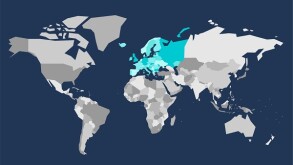
While deals are being diverted away from the US to Europe in certain sectors, the picture does not look rosy as national level FDI regimes grow in number across the region

Chinese investors are looking to diversify outbound investment, not only looking to Europe and elsewhere in Asia but at deals with the potential to avoid scrutiny from the US Committee

The majority of survey participants expect to see interest in Chinese outbound M&A transactions going into Southeast Asia, while some expect activity in Western and Eastern Europe

Fuelled by internal policies and the need to gain access to technology, healthcare and TMT will continue to be popular sectors that draw the most interest from Chinese investors

Faced with geopolitical tensions and heightened national security concerns on FDI, Chinese enterprises aspiring to go outwards will need to consider alternatives

IFLR surveyed the market to gauge sentiment for the next 12 months to see where the challenges and opportunities lie

Russia's invasion of Ukraine has serious sovereign creditworthiness implications for both countries as they weaken economically and fiscally

The fourth part of this five part report examines the definition of sovereign risk, how sovereign risk is assessed, and what the available options are for its mitigation
Sponsored
Sponsored
-
 Sponsored by Elias Neocleous & CoLibor [London interbank offered rate] is the primary benchmark, along with Euribor, for short-term interest rates around the world. Libor rates are calculated for five currencies and seven borrowing periods, ranging from overnight to one year, and are published each business day. Libor is based on submissions provided by a selection of large international panel banks. These submissions are intended to reflect the interest rate at which banks could lend one another unsecured funds. Many financial institutions, mortgage lenders, and credit card agencies set their own rates based on this. However, in 2017, the UK's Financial Conduct Authority (FCA) announced that after 2021 it would no longer require the panel banks to submit the rates needed to calculate Libor. Libor will no longer be published after the end of 2021, and market participants are urged to transition to alternative reference rates (ARRs).
 -
Sponsored by Nagashima Ohno & TsunematsuOn July 24 2019, based on a request from the Financial Services Agency (FSA), the Trust Companies Association of Japan – a financial association whose members comprise of financial institutions engaged in trust businesses – proposed sample provisions to deal with the risk of money laundering etc. in trust agreements. The outline of these sample provisions is as follows:
-
Sponsored by Riquito AdvogadosContractual relations between governments and the private sector are usually dictated by a strict set of rules and regulations, that are set in place as an assurance that the public interest is protected and that the public procedures are transparent and subject to the necessary advertising and competitive tendering requirements. In this context, the exceptional public health situation we are living in represents a true game changer, posing challenges to the existing legal frameworks and imposing upon governments the task to quickly adapt the regulatory system to provide answers to the ever evolving pandemic situation.



-

Yoon & Yang chief: strong pool of talent a ‘key building block’
Hee Woong Yoon, managing partner at Yoon & Yang, reveals key growth opportunities in corporate finance and M&A for the firm as he settles into his new role -

Linklaters: ‘Regulators are becoming more sophisticated in their supervision’
Carl Fernandes, global head of Linklaters’ financial regulation group, outlines the firm’s opportunities in the financial sector, particularly in Europe and the US -

Argentine law firm eyes debt market opportunities in volatile market
TCA Tanoira Cassagne’s founding partner Alexia Rosenthal explains how the firm is helping clients access capital in a challenging environment -

Kirkland & Ellis captures ‘take-private’ opportunities in Asia
Asia M&A co-head, Joey Chau, reflects on the firm’s work on public-to-private transactions in Hong Kong and the outlook for deal opportunities in the region -

Afreximbank: ‘Responsiveness and accessibility of external counsel are critical’
Legal services head Joy Albright outlines the challenges for the rapidly growing bank and her priorities when choosing external counsel