IFLR is part of Legal Benchmarking Limited, 1-2 Paris Garden, London, SE1 8ND

Copyright © Legal Benchmarking Limited and its affiliated companies 2026

Accessibility | Terms of Use | Privacy Policy | Modern Slavery Statement


thomas-helm-300px.jpg

Thomas Helm

Financial journalist

Thomas has worked for a variety of media outlets, including Kashmir Observer, La Vanguardia, and Hürriyet Daily News. His long report "The Accumulative Impact of Post-Crisis Regulation" was the first journalistic attempt to survey the impact of post-2008 reforms on financial markets. He is currently focused on Brexit, Mifid II, market structure issues, and sustainable finance.

Published by this author list

Published by this author:

  • IFLR's editorial team provides a rundown of the most influential individuals, organisations, geopolitical events and trends in financial regulation in 2019
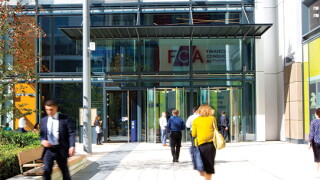
  • The Financial Conduct Authority (FCA) – the UK's all-encompassing financial services regulator – is at any point the subject of either praise or derision, depending on the commentator. But there is rarely any middle ground. It has earnt itself the reputation as one of the European Economic Area's most fine-happy enforcers, with a particular penchant for punishing firms over failures to comply with the new wave of reporting requirements.
  • The European Securities and Markets Authority (Esma) is responsible for pushing some of the most far-reaching regulatory reforms in the history of finance. Their reforms have two basic aims: investor protection and risk management. These deceptively simple objectives have created complicated regulatory frameworks – and it truly is a team effort.
  • There's arguably no one more familiar in the European market structure space than Liquidnet's Rebecca Healey. Having been in her role as head of EMEA market structure and strategy for the equities exchange for just three years, Healey has made major waves, positioning herself as the go-to on Mifid II's myriad market structure issues.
  • What could be more influential than the 2008-9 financial crisis, the financial crisis of the century? The catastrophic event led to the collapse of Lehman Brothers and left practically the entire world wondering what went wrong.
  • While larger firms look to fine-tune their work on the Fundamental Review of the Trading Book, medium-sized banks are considering more complete outsourcing solutions, according to banking and consultancy sources
  • Market participants and the FCA have welcomed news of the first ever successful amendment of a floating rate note to reference an alternative rate instead of Libor
  • Market participants are successively circumventing the rule that limits dark pool trading, though the new status quo could prove transitory if and when the regulator steps in
  • According to in-house sources, the capital requirement rules are behind the surprising growth of Europe's synthetic securitisation market
  • Advisory firms are still struggling with the "feedback loop": the product governance rule that requires distributors to report back to manufacturers with information on sales and negative target market information
  • Associated British Ports may be the first to begin updating problematic legacy contracts to reference Sonia rather than Libor. Bankers view it as a test case
  • Hedge funds say that if regulators can be clear on the economic value transfer of switching from Libor to risk-free rates, there will be less scope for costly litigation